When 'handheld' meets 'supercapacitor', the limits of welding are redefined. AWithZ HF7 — the industry's first handheld capacitor spot welder, fully tested and revealed. #AWithZHF7 #Handheld #CapacitorSpotWelder #Battery
Industry first, major launch! The all-new supercapacitor handheld HF7 spot welder is here! Not every handheld deserves to be called professional. Li-ion pack assembly, tool re-celling, model power mods — all done one-handed. Welds solid, lasts long, tunes precisely, no compromise. Stop settling — get it right in one step. Get in on the launch, keep watching👇
#AWithZSpotWelder #HF7 #HandheldSpotWelder #CapacitorSpotWelder
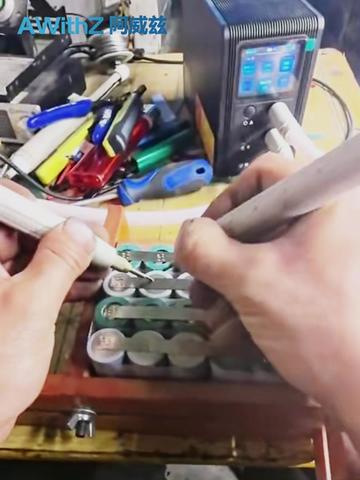
[Spot welding footage] Continuous welding with no fade — 21700 packs welded with ease, 0.2mm nickel-plated steel strip fused in an instant!
Safe and solid — professional performance, instantly next-level!
#BatteryMods #CapacitorSpotWelder #PowerPackAssembly #LiIonTools #P60F
12-minute unboxing and test of the AWithZ P30C capacitor spot welder: 3 × 1000F supercapacitors, 9V15A XT60 charging, usable after 5 minutes, 25 mm² pen cable, 999 gears; at gear 600 it welds 0.2×10 copper strip stacked on 0.15 nickel-plated steel strip to 21700s, external meter peaks 2070–2107A, strip tears apart without a weld letting go; gear 500 at 2052A also welds but 550–600 is recommended
An RC-model creator unboxes the more professional P30-series capacitor spot welder he chose for building 21700 power packs. Packaging: an intro card (32 patents worldwide), two accessory boxes and the main unit. Accessories: a 9V15A charger (charges the capacitors), a foot switch, an 18650 plastic welding jig, two spare pairs of welding pins, a very thick, soft pure-copper pen cable (later checked: 25 mm²), nickel strip (0.1 or 0.15), a file for dressing the tips, and the manual (battery icons, system settings, thermal protection — no charging above 60℃ or below -10℃, 2.4-inch color screen, about 180×131×80mm, auto power-off after 8 minutes idle, three ‘welding experience’ notes). The body is a boxy plastic shell but feels heavy; P30C model mark at bottom right; on the front a 2.4-inch color screen, power and control keys, two welding-pen ports and a trigger port; XT60 input at the rear. Nameplate: welding output voltage 9V (MAX), output current 2430A (MAX), max output power 21.8kW, input 9V/15A. Red warning: the two tips of a P-series pen may only touch the same terminal plate of a cell — never touch the two plates separately, or it shorts and catches fire. Main screen on power-up: welding mode (manual / auto), preheat time, interval time, welding gear, trigger time, repeat count; OK means ready to weld, a slash means low battery; internal temperature shows 27℃; system settings: language, repeat interval, welding sound, screen brightness, screen rotation, auto power-off, factory reset; plus three ‘welding experience’ notes (results depend on pen pressure, material thickness and stacking order) — helpful for beginners. Inside are three 1000F supercapacitors; from completely flat, 5 minutes of charging is enough to weld. The pins are imported alumina copper. Test: straight to 0.2×10mm copper strip stacked on 0.15 nickel-plated steel strip (the nickel layer adds resistance so the copper can be welded to the cell), starting at gear 600 (max 999) with an external welding-current meter connected; he recommends keeping the charger plugged in while welding to top up at any time. Gear 600: four welds, peak 2070A, RMS 1574A; pulling tears the strip apart, fully welded. Down to gear 500: 2052A, both welds hold too (one torn through, one shows copper flow), but to be safe 550–600; back to 600 for 3 more shots, 6 welds, all tear apart with no weld letting go, current 2107A — the rated max is 2400-odd amps and gear 600 is already enough. Conclusion: 0.1/0.15/0.2 and even 0.3 nickel-plated steel strip, and 0.2 copper stacked on 0.1/0.15 nickel, are no problem at all — fully up to building 21700 power packs; long-term performance to be seen once he builds packs with it. Comments: ‘only 2000A at this price’, doubts that 2000A can weld 0.2 copper on 0.15, someone’s ¥336 home-built welder does the same but with tearing, and someone says 0.15+0.15 tears at gear 270 after switching to a one-piece pen.
We only use essential cookies, plus one performance measurement you can turn off. Cookie Policy
EssentialSign-in, language, theme and similar; the site cannot work properly without them
Always on
FunctionalPlayback history and filter preferences, stored only in your browser
Always on
PerformanceAnonymously reports page load times so we can speed up the site; not linked to your account or shared with third parties
Official stores
Go to our official stores on third-party platforms
AWithZ · Product feedback & suggestions
Ran into a problem? Have an idea for improvement? Tell us. We read every piece of feedback carefully. Valid feedback earns points, redeemable for accessories / coupons.
Thanks for your feedback!
We'll review it within 1–5 business days. If you left an email, valid feedback earns points redeemable for accessories / coupons. If we need to follow up, we'll contact you at the email you left.
We'll review it and send the result to your inbox. Abusive reports may be restricted.
Before you browse
WeldWorld is an open platform for user sharing; content does not represent official advice.
Improper battery handling can cause fire, explosion, chemical burns and serious injury. Read the full AWithZ Safety & Usage Guidelines before any lithium battery assembly, spot welding or testing, and before using the community.
Community content is personal experience, not verified by AWithZ; where it conflicts with official documents, the official documents prevail.
Never apply someone else's settings directly; always start at a low level and test on scrap.
Before copying any procedure, go through the self-check list in Part 3 of the guidelines.

 LV5
LV5
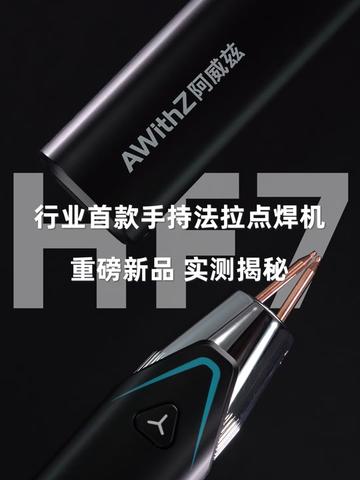
 HF7 Handheld Supercapacitor WelderProductsAWithZ



 LV1
LV1