
Me
#Electronics hobbyist Share your welding progress, a question or a finished build…
Public Post
Can your hand touch the steel strip while welding?
 AWithZ high-power spot welder — welding lithium cells, handy and effectiveProjectsElectronics Basics
Who to followRefresh


 LV5
LV5
The Village’s Only Primary-Schooler builds a Dayi-style 20V 10-cell tool battery with the UK1 (Samsung 2800mAh, genuine imports, matched internal resistance / capacity / voltage): manual gear 98, one pulse and it’s solid, ‘can’t pull it off’, better than his old small handheld; tried auto mode, not to his taste; two-pulse rapid-fire at gear 95 is better, turned down later; tape on, BMS fitted, done; the UK1 is compact, welds ordinary cells, not large prismatic cells; gold-plated plug, optional foot switch, button on the handle, Type-C, replaceable pins; pinned: 0.15 nickel-plated strip, set mid-range; blackening — turn down, won’t stick — turn up
His home-made microwave-transformer welder is too bulky to carry, so he got the AWithZ portable welder to see how it does. Found a Dayi-style tool battery (2-98V 20000, 10 cells); Samsung 2800mAh cells, genuine imports, each with a stamp on the negative end; internal resistance, capacity and voltage were checked before and match, so straight in. No dedicated nickel strip, so use the 15-cell one and trim the excess. Hold the power button two seconds, manual mode, gear 98, one pulse; first time using it, unfamiliar; quite solid, can’t pull it off, fully meets the requirement; keep going, never expected something this small to be so effortless, nailed it; pretty solid; an earlier small handheld was a bit lacking on this strip, never expected this one to handle it completely; supposedly max current 1200A, whether it’s really that high doesn’t matter, if it welds well that’s OK. Try the other mode (rapid-fire): two pulses, OK; gear set to 95 to try; it’s back in manual now, auto mode isn’t to his taste, sometimes it fires before he’s finished positioning; though auto mode has an adjustable wait time; still prefers manual; two pulses like this is better; turn the gear down a bit. Done, checked for misses; assemble: tape along both sides on top, BMS on and welded, finished; try it (angle grinder). The welder again: compact and easy to carry, didn’t expect much, just wanted portability, but the results are good, welds ordinary cells, definitely not large prismatic cells; the pen plug comes out and fits tight, gold-plated; the foot switch plugs in here, not normally used, just the button on the handle; charging cable, Type-C port; pins are replaceable, pull them out with pliers; nice design. Comments (23): how to set the two modes → by nickel-strip thickness, no blackening and it sticks is fine, 0.15 nickel-plated set mid-range; too pricey (1) → make one from a microwave transformer, works just as well but took two days; brand-name gear looks classy and welds well, AWithZ knows how to make a product (1); 98 is too high / will blow through; why is so much of the negative-end wrap missing; can it weld Jiashikai; can batteries be shipped yet.

 AWithZ portable Li-ion spot welder — building a power-tool battery pack with the AWithZ portable welderProjectsVillageKid
 LV5
LV5
[Welding test] UF20B: palm-sized, with the strength of a thousand pounds. 0.2mm pure nickel sheet on an 18650 pack, solid welds, energy focused in an instant #AWithZSpotWelder #diy #CompactSpotWelder #GeekMods #ElectronicsHobbyist

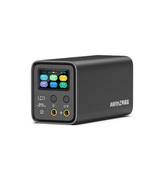 UF20B Supercapacitor WelderProductsAWithZ
LV5
UF20B Supercapacitor WelderProductsAWithZ
LV5
[Unboxing moment] UF20B — a professional power station in your palm. No preheat needed, one-button stable welding, easy spot welding, enjoy the assurance of every precise weld! #AWithZSpotWelder #diy #CompactSpotWelder #GeekMods #ElectronicsHobbyist
 UF20B Supercapacitor WelderProductsAWithZ
 LV4
LV4
Supercapacitor + lithium jump starter (part 1): strip the original unit and re-plan the layout, remove the high-resistance main switch and replace it with a cell-to-capacitor switch, put lugs on the 25mm² leads, measure capacitor internal resistance 2.7 / 2.1; 10 × 21700 4000mAh, 2P4S, spot-welded with the AWithZ; oven paper as a heat barrier so thermal runaway can’t short; foam padding; shorting the cells straight onto the 0V capacitors draws 40-odd A (85A per the comments), clamps glow red — conclusion: must pre-charge through a resistor
Step one of the jump starter is stripping it down and re-planning the layout: wide at the bottom, narrow at the top, so the cells can only stand upright; turn the capacitors so the leads go straight out, shortening them to raise output current. The original board’s wiring was a mess and mediocre quality, so it all comes out; the original main switch has very high internal resistance, so it’s removed and replaced by a switch between the cells and the capacitors — flip it and the capacitors charge, no current limiting because the capacitors are small (big capacitors and you wouldn’t need the cells at all). The original wire is solid stuff but wasn’t secured after connection, so it made poor contact. The case cabling is nice and long enough; + and − are reversed to match the capacitor polarity; wire about 5mm dia., 25mm², re-routed with length to spare; crimp the +, and add a lug to the short − lead. Remove the original BMS and measure supercapacitor internal resistance: one 2.7, the other 2.1, slightly unbalanced. Crimping lugs: not a single strand showing, crimp one side then the other, drive the force at an angle from one side to the other, use a huge amount of force so it’s tighter than stock; with no heat-shrink this big, wrap in black tape leaving only the capacitor contact area bare. Trial-fit the −: enough room, enough slack; the cells can only go in this way, switch back in place, layout solved. There are 10 cells: 12 would make 3P4S, 10 only makes 2P4S; the spot welder joins the pairs in an instant, then three upright and one across to link them in series; oven parchment (forgot the fish paper) between them because it withstands heat, so a thermal runaway won’t short straight through — heat-shrink peels off when hot and shorts both faces; jokes that his poor welding is ‘wasting the cells AWithZ sent’. Voltage fine after welding; balance leads connected (smarter to bring them straight out); tape over the welded face against punctures, then fish paper; BMS wired (an odd shape, roughly done): two thin leads charge / discharge through the BMS, two extra-thick leads short-charge the capacitors instantly. Foam padding in the case so the capacitors sit firm and a drop won’t be too dangerous; lid snaps on tight, slight wobble to fix later. Charging-circuit test: cells shorted straight onto the 0V supercapacitors, clamps glow red, current hits 40-odd A — too dangerous, could blow, must pre-charge through a ceramic resistor and only then close the shorting switch in parallel and start. Comments: someone built 3S5P 18650 + 6 × 500F in series and it struggles to start a 2.0T (creator: voltage too low, needs 4S at 16.8V to fill the capacitors); the copper lugs are sloppy; capacitor internal resistance too high; a local warns the capacitors are too small for winter (creator: couldn’t bring himself to buy big ones, not the optimal solution).


 Building a car jump starter from supercapacitors + lithium cells — the cells store energy, the supercapacitors deliver the big current; 21700 4000mAh cells in 2P4S, 2.7V 360F supercapacitors, two together should push past 100A instantaneous, CCA estimated 500+, should start a 2.4L car; final assembly and test nextProjectsDoomsday Lab
Related productsAll ›
 LV5
LV5
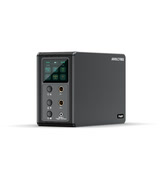
Ultimate performance, precise welding! Ultimate performance, precise welding! The UF20B packs a high-energy supercapacitor, 10.5kW power output — even 0.15mm copper sheet welds perfectly! #ForCompactSpotWeldersChooseAWithZ #WeldingWonderTool #GeekMods #ElectronicsHobbyist
 UF20B Supercapacitor WelderProductsAWithZ
LV5
UF20B Supercapacitor WelderProductsAWithZ
LV5
Light and powerful! U3 Pro spot welder masters 18650 packs! Home-made power bank~ #ForCompactSpotWeldersChooseAWithZ #WeldingWonderTool #ElectronicsHobbyist #GeekMods #diy 8-19

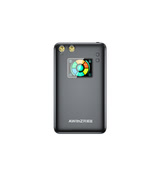 U3 Pro Battery WelderProductsAWithZ
LV5
U3 Pro Battery WelderProductsAWithZ
LV5
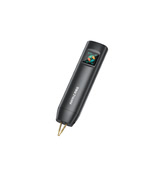
Welds you can't tear apart! Don't be fooled by the small size! H1 handheld spot welder, straight out of the box onto 18650 cells: welds you can't tear off — beginners, buy with eyes closed! #AWithZSpotWelder #EquipmentReview #ElectronicsHobbyist #HardwareTools #WeldingWonderTool

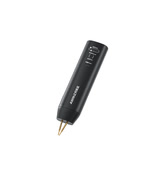 H1 Handheld Dual-Pulse Welder (prev. gen)ProductsAWithZ
Scroll for more · 48 rows