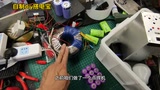
Jump starter, part 2: three layers of nickel tabs welded with almost no charge used; 4S BMS + balance board wired (main +, +1, +2, +4, main −), charges at 14.5V, panel shows full, USB is a slow charge, Type-C charging works; main + / − leads swapped for thicker wire, bundled and insulated with electrical tape, back into the shell
The whole pack is welded up, with three layers of tabs on top — very solid; the charge level has barely dropped, so it should weld a lot of packs — very handy. Wiring the BMS: main + goes to +1, +2, +4 and main −; the leads are short, so extend them; red sleeve on the main +, yellow on the rest, foam pads for a first fix; trim any sharp protrusions; fix the pack first, then wire it, or it’s hard to secure afterwards. With the BMS and balance board connected it charges at 14.5V from a low-voltage supply; press the switch and it shows full, the lamp is quite bright; USB charges a phone at 29% — works, but a very slow trickle; Type-C charging shows normal, the last lamp blinking means not quite full. The main + and − ‘thick’ leads aren’t actually thick, so they’re swapped for wire a good size up from stock. With all the main leads connected and tidied, no heat-shrink to hand, so it’s bundled with electrical tape, two turns over each contact point; it fits back into the original shell exactly, with extra insulation on the main + to prevent shorts. Comments: a car draws 200–600A to start, 3P 18650 gives 60–90A at most, and with enough current the nickel-plated steel strip burns through in seconds (creator: cells picked up from a live stream, 2C is as good as it gets); does drawing power straight off the pack without going through the BMS matter (creator: discharge doesn’t go through the board); copper strip thickness and cell C-rate are both too low, too dangerous; where to buy the welder (shop window); leave a watermark to stop reposts; part 3 tests capacity.
Bluetooth-speaker shell turned car jump starter (part 1): 12 × 2500mAh cells in 3P4S, AWithZ welder in auto mode firing 0.5s after contact, insulating paper on the negative-can side to stop shorts, 16.01V when done; lead-acid tester reads 12.6mΩ / CCA 264; even three layers of nickel strip weld through, 'buying one for a hundred-odd yuan beats making your own'
A car jump-start pack built from a solar Bluetooth-speaker shell grabbed cheap on Douyin. The cells were also grabbed from the Douyin store, all around 2500mAh; paired with a Type-C 5V input charging board. He had built a spot welder from a microwave transformer before — hard work and poor results; then grabbed an AWithZ spot welder that runs a long time per charge, a hundred-odd yuan (an even better deal when it was ¥168), and it comes with small nickel strips. Before welding, stick insulating paper on the negative-can side so overheating can't short positive to negative. 3P4S; welder in auto mode, fires 0.5s after contact, tack one end first and press firmly; welds are clean and very solid; don't weld the middle too tight, leave a little slack — 'leave a line when welding and swelling stays friendly'; a foolproof device, very convenient. After all the positives were welded the charge was still full; the built-in battery beats his big homemade rig by far. Series: connect pairs in series, flip and connect again, main positive and main negative; measured DC voltage 16.01V, just right for a jump starter. Measured with a lead-acid battery tester as a makeshift: internal resistance 12.6mΩ, voltage 13.9V, discharge CCA 264 — should start a 2.0T car normally. Main positive and negative still need a few extra wires to boost discharge current. Test: two and three layers of nickel strip stacked both weld through solidly; conclusion, buying beats building, it's in the shop window. Comments: someone pointed out that a jump starter without copper strip makes no sense and the cells can barely do 2C (creator agrees, 'it'll do'); someone says this kind of welder uses a pouch cell that swells after heavy use and loses performance until it won't fire; a lead-acid tester can't measure Li-ion accurately (creator replies the accuracy is poor).
Bluetooth speaker shell to car jump starter (part 1): 12 × 2500mAh cells in 3P4S, AWithZ welder on auto fires 0.5 s after contact, insulating paper on the negative-can side against shorts, 16.01V after welding; lead-acid tester reads 12.6mΩ / CCA 264; three layers of nickel strip still weld through — ‘a hundred-odd yuan to buy one beats building it’
A car jump starter built into a solar Bluetooth speaker shell scored on Douyin. The cells were also cheap finds from the Douyin store, all around 2500; plus a Type-C 5V input charging board. He’d made a spot welder from a microwave transformer before — hard work and poor results; then he picked up an AWithZ spot welder, one charge lasts a long time, a hundred-odd yuan (bigger discount when it was 168), and it comes with small nickel strips. Before welding, stick insulating paper on the negative-can side so overheating can’t short + to −. 3P4S; the welder is on auto — it fires 0.5 s after contact; weld one end first and press down; welds are clean and very solid; the middle is not welded too tight, a little slack is left — ‘leave a line in the weld and a swollen cell will thank you’; a foolproof device, very handy. After all the positives were welded the charge was still full — the built-in power is way better than his big home-made unit. Series: join in pairs, then flip and join again, main + and main −; DC voltage reads 16.01V, just right for jump starting. A lead-acid battery tester made do: internal resistance 12.6mΩ, voltage 13.9V, discharge CCA 264 — should start a normal 2.0T car. The main + and − still need a few extra wires to raise discharge current. Tested stacking two and three layers of nickel strip — both weld through solid; conclusion: buying beats building, it’s in his shop window. Comments: someone points out that not using copper strip for a jump starter makes no sense and the cells can barely do 2C (creator agrees, ‘it’ll do’); someone says this kind of welder has a pouch cell that swells after lots of welds and loses performance over time until it can’t weld; a lead-acid tester can’t measure Li-ion accurately (creator: poor precision).
We only use essential cookies, plus one performance measurement you can turn off. Cookie Policy
EssentialSign-in, language, theme and similar; the site cannot work properly without them
Always on
FunctionalPlayback history and filter preferences, stored only in your browser
Always on
PerformanceAnonymously reports page load times so we can speed up the site; not linked to your account or shared with third parties
Official stores
Go to our official stores on third-party platforms
AWithZ · Product feedback & suggestions
Ran into a problem? Have an idea for improvement? Tell us. We read every piece of feedback carefully. Valid feedback earns points, redeemable for accessories / coupons.
Thanks for your feedback!
We'll review it within 1–5 business days. If you left an email, valid feedback earns points redeemable for accessories / coupons. If we need to follow up, we'll contact you at the email you left.
We'll review it and send the result to your inbox. Abusive reports may be restricted.
Before you browse
WeldWorld is an open platform for user sharing; content does not represent official advice.
Improper battery handling can cause fire, explosion, chemical burns and serious injury. Read the full AWithZ Safety & Usage Guidelines before any lithium battery assembly, spot welding or testing, and before using the community.
Community content is personal experience, not verified by AWithZ; where it conflicts with official documents, the official documents prevail.
Never apply someone else's settings directly; always start at a low level and test on scrap.
Before copying any procedure, go through the self-check list in Part 3 of the guidelines.
 LV4
LV4


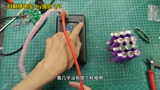 A home-made jump starter from 18650 cells — only 2C cells, picked up for ¥20-odd on the Douyin store; DIY car emergency power, built into a bought Bluetooth-speaker shellProjectsDoomsday Lab