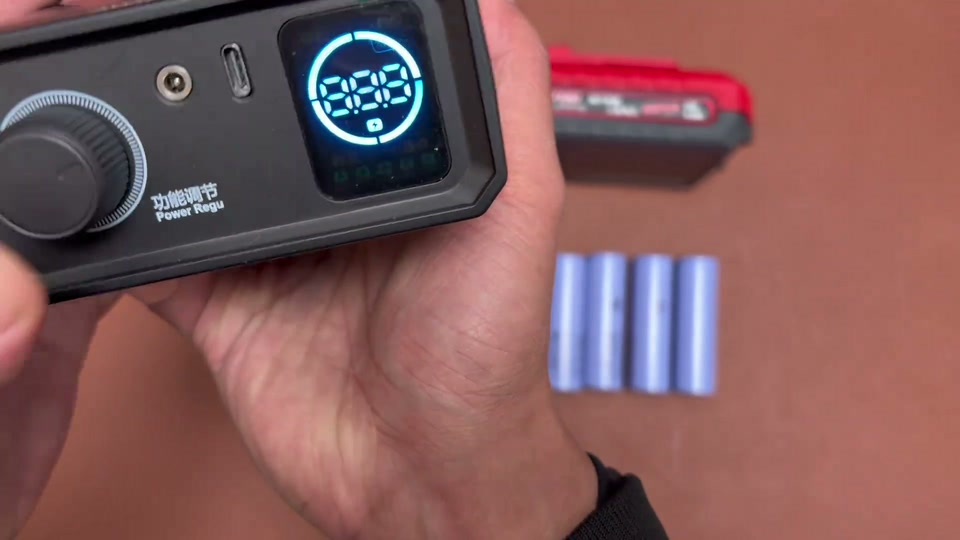
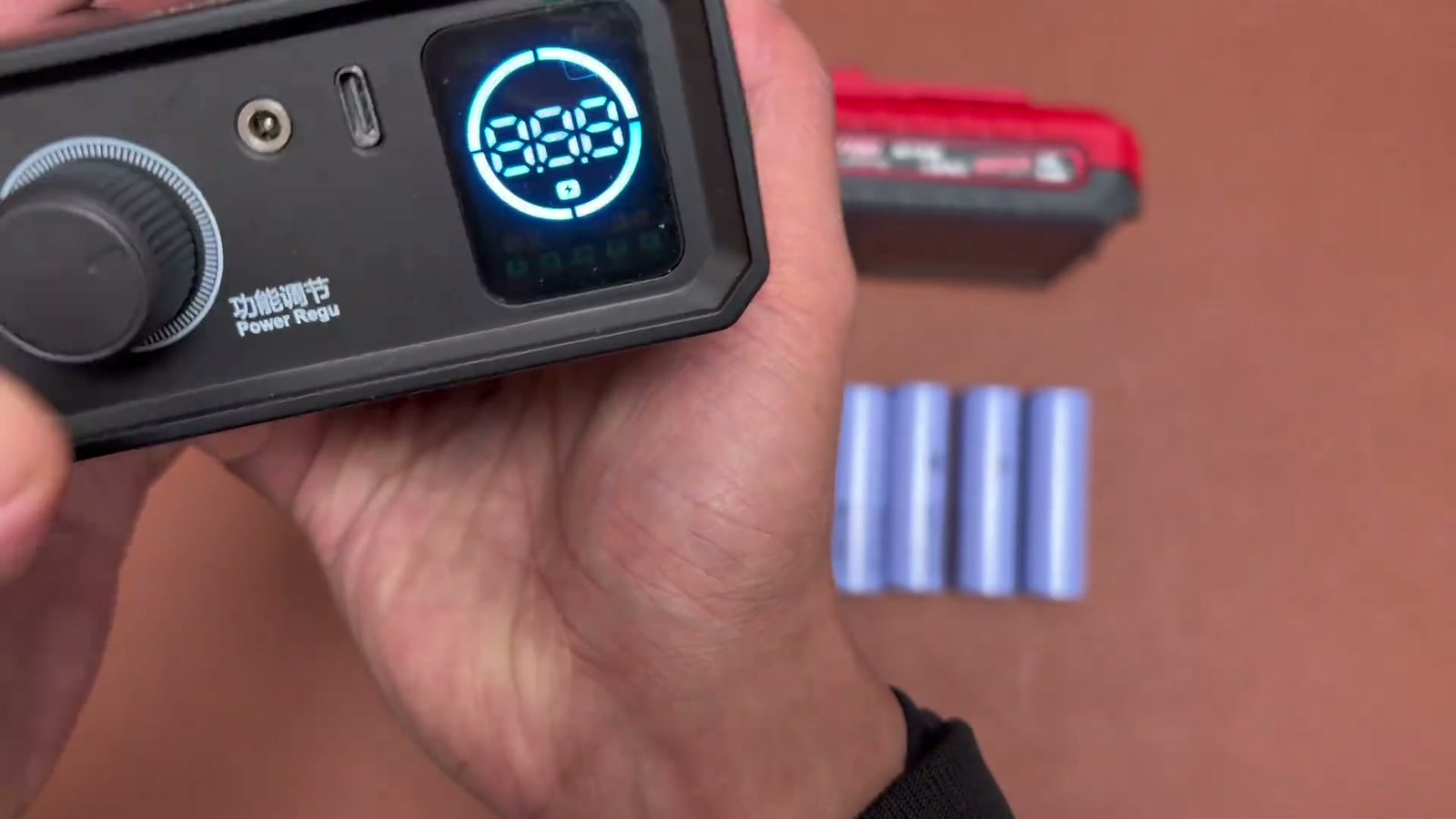
Diangongbang’s 13-second sales pitch (same script as w113): a handheld rechargeable spot welder that welds nickel strip onto batteries / stainless steel very solidly, welding power and time adjustable, charges from a phone charger; comment: an H1 owner says the H2 upgrades the screen and features, more professional
No need to ask for help or use a soldering iron for battery welding; a handheld rechargeable spot welder that welds nickel strip onto batteries and stainless steel, very solid; welding power and welding time both adjustable; charges from a phone charger, really convenient to use. Screen shows 4ms, T 21℃. Comment: thumbs up for the AWithZ handheld welder, bought the H1 before, this H2 upgrades the screen and features, looks more premium and professional.
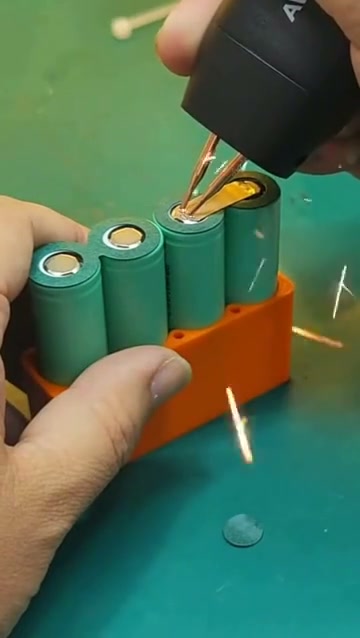
Diangong Bang's 13-second H2 pitch: weld cells without asking anyone for help or using a soldering iron, handheld and rechargeable, nickel strip welds solidly onto cells / stainless steel, no welding guide needed, weld time adjustable, charges from a phone charger; the only comment: great for 18650/21700, keep one at home and save on repair bills
Weld cells without asking anyone for help or using a soldering iron; handheld rechargeable spot welder; welds nickel strip onto cells and stainless steel, extra solid; no welding guide needed, weld time is adjustable; charges from a phone charger; very convenient to use. Title: colour screen with adjustable weld mode and strength, handy for repairing and DIY-building packs. 1 comment: the AWithZ handheld spot welder is good, great for 18650 or 21700, keep one at home, fix your own batteries and save on repair bills.
Youzi Teardown (Chinese/English subtitles) builds a 5S Samsung 40T 21700 pack in a Dayi A3 pin-terminal kit with the AWithZ UK1 (nameplate 5V/2.4A in, 8.4V/1380A MAX, adjustable mode / gear / trigger / continuous, the pen only welds when its switch is pressed): cells go in by the holder to locate main − and main +, a small nickel piece joins the main − first, flip over for the main +, gauge red to L+ and black to L−, fit the spring and lid with four screws, test on an A3 tool
Building a 21700 five-series pack with Samsung 40T cells (INR21700-40T); the welder is an AWithZ UK1, 5V (2.4A) input, 8.4V output voltage, 1380A current, Shenzhen Juequi Technology; on power-up it has adjustable mode, gear, trigger and continuous; its pen doesn’t weld the moment it touches, you also have to press a switch — he’ll show that when welding. The kit is a Dayi A3 pin-terminal one, open it, there’s nickel inside, tip it out. How the cells go: the bent part faces this way, this is the main −, so the negative goes on this side; once in, locate the main − and main +, this is positive; join the main − first, the small nickel piece goes here; unlike the previous pen that welds as soon as it touches, this one only starts when the switch is pressed, very convenient; the large nickel goes on; flip it over, weld the main + first, then put it in; this pack is now connected. Gauge: by the way the case sits, the gauge goes at the back, red to L+, black to L−; set it in; pack welded, lid on, there’s a spring that must go in or the button won’t come back up, four screws in; find an A3 tool and try it; have you learned to weld a pack now? 159 comments: where to buy brand-new genuine cells, JD / Taobao / Pinduoduo are full of fakes (3); are 5 × 4.0 reliable, EVE 40P for about ¥100 (2); how much is the welder; tabless vs Sony C6; which welder for copper shims.
17-second hardware-store sales pitch: weld batteries without asking anyone or using a soldering iron — a handheld rechargeable spot welder welds nickel strip onto cells really solidly, power / time adjustable, charges from a phone charger, really handy
Welding batteries — no need to ask anyone for help and no soldering iron; this is a handheld rechargeable spot welder that welds nickel strip onto cells, and the welds are really solid; welding power and welding time are both adjustable; a phone charger is enough to charge it, really handy to use. All comments are ‘share’.
Hardware store 18-second sales clip (same script as w113): weld batteries yourself without a soldering iron; the handheld rechargeable spot welder welds nickel strip onto cells / stainless steel and it holds really well; comments are all ‘shared’
Weld batteries yourself, no asking for help and no soldering iron; this is a handheld rechargeable spot welder that welds nickel strip onto cells and stainless steel, and it holds really well (no voice-over in the second half). Title: clear screen, simple operation, first-rate welds, a must for hardware-tool enthusiasts. All 9 comments are ‘shared’.
Lefeng admits he hasn’t figured the U3 out: the Jiashikai negative is steel, so he tests on a stainless-steel knife — 0.1 nickel strip only needs gear 1.5–1.8 (anything around 1.x is fine), 0.15 nickel strip at gear 2.5 blackens and throws sparks, not good, still not dialed in; cells are on the way and he’ll keep experimenting; comments: ordered from the storefront and it won’t power on, microwave-transformer welder also failed, once you get into it you’ll want a capacitor unit
The comments say I can’t even figure out the AWithZ spot welder; honestly, I haven’t, I’ve tried lots of settings. Because the Jiashikai negative is steel, I test on a stainless-steel knife: for 0.1 nickel strip on this cell the gear only needs to be 1-point-something, 1.5 is enough, and there won’t be a problem; how many gears 0.15 nickel strip needs I don’t know, bumped to 2.5 to try: too high a gear blackens it, it’s already throwing sparks, the result isn’t great, probably still not dialed in; the cells are bought and on the way, I’ll keep experimenting with this AWithZ spot welder. Title: 9.9 gears, 0.1 only needs gear 1.5–1.8; “I haven’t figured it out and you’re still buying it after me, unbelievable”. 207 comments: ordered from your storefront, arrived today and won’t power on (check whether it has charge; if it doesn’t work, return it right away); my microwave-transformer welder failed too (you’re going down the road I went down; the money for a hand-build buys one of these); a Zhongwei Zhixing 30s can’t weld 0.1 nickel-plated stacked on 0.1 copper to a Jiashikai negative (0.1 copper needs a ¥400–500 class machine); fine for beginners to play with but later you’ll definitely want a capacitor unit (yep); get a UF20B; how about the Xiaoqiang.
Zhizhi uses a high-current inductor + an AWithZ U3 (650A/4.2V) as the power source for an ‘ultra-low-voltage coilgun’: clamped in a vise, projectile pushed in, fired by the spot-weld trigger, decent power with visible recoil; the improved version has a thicker coil and only needs a press, no sparks, but a larger gap makes it less efficient; ‘the most powerful coilgun with the least copper’
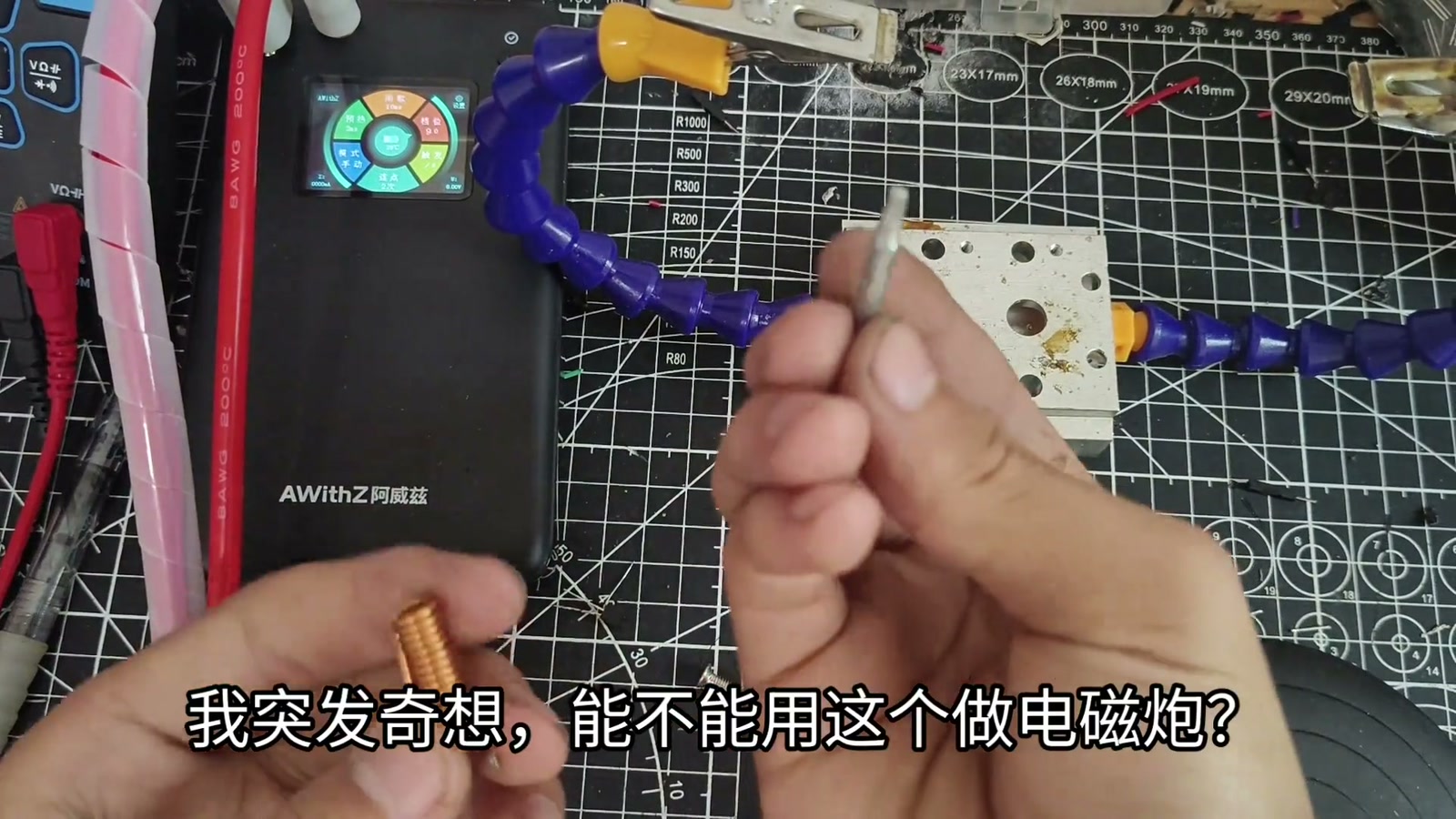
A high-current inductor, and a sudden thought — could it make a coilgun; clamp it in a vise to test; push in the projectile; the resistance is tiny so it needs a high-current source, which brought the spot welder to mind — mine peaks at 650A with an output of only 4.2V, and if it works this is an ultra-low-voltage coilgun; try it straight away, decent power, you can see the recoil; the improved version has a thicker coil and only needs a press, no sparks, push in the projectile and try, efficiency seems a bit lower because the gap is a bit big; back to the original — truly the most powerful coilgun with the least copper; see you next episode. Comments: go study engineering, hand-build god (3); only 3.7V? the instantaneous high current makes the field that pushes it (creator: spot welders are all 1S or 2S, mine is 1S); a 310V one only manages this much; bubble-tea straw as the rail, thin is the point; could a supercapacitor be the power source.
DIY welder fail diary: a JX-D99 five-MOSFET welder board is a ‘toy’ without enough punch; adding MOSFETs, it blew after a dozen or so welds, a second one still wasn’t enough; finally switched to an AWithZ UF20B (1750A); welding 0.1 nickel strip gives bright, clean welds
The creator ‘teaches you welders’: first a JX-D99 welder board (a toy) + welding pens, hooked to a battery, five MOSFETs underneath; it felt underpowered so he added MOSFETs at the back, and after a dozen or so welds it blew; bought another and it still didn’t feel up to it; then switched to an AWithZ welder, model UF20B, 1750A, 5000W instantaneous (nameplate: 6.0V MAX, 1750A MAX, 10.5kW MAX, 100–240V, Shenzhen Juequi Technology); test-welded two pieces of 0.1-thick nickel strip — welds very good, bright and clean. Comments: ‘so the conclusion is you bought a welder for a few hundred bucks’, ‘you’re teaching us to buy a welder’, ‘talked into buying yet another one’; someone says Xiaoqiang’s can reach 2500+; someone claims a 5-MOSFET board with a 4S 120C battery at gear 75 can weld 0.1 nickel stacked on 0.5 copper (creator: no way).
Lao Gao (RC / FPV) unboxes the AWithZ U3 (11000mAh, a hundred-odd yuan) and walks through a 2S 18650: a soldering iron on an 18650 runs too hot and hurts the cell, so spot-weld to ‘convert’ the terminals to nickel strip and then tin; manual mode, preheat 2ms / interval 2ms, gear 5, 4 spots per cell; 8.06V in series; the positive’s aluminium oxide layer won’t take solder so only nickel strip works; XT30 + balance leads, EVA foam + heat-shrink, balance port 4.048/4.039V, fast-charge with an RC charger
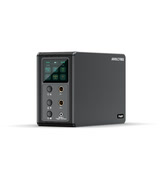
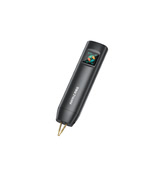
Unboxing the AWithZ U3 spot welder, a common tool for RC car folks: looks like a power bank, two gold-plated sockets for the welding pens, USB output doubles as a power bank, Type-C charging, 11000mAh 3.7V, ‘pioneer of small portable spot welders’; the manual matters (welding method, settings tutorial, weldable nickel / copper thicknesses); the accessory bag has two welding pens, a USB cable and a small pack of nickel strip. Use: DIY 18650/21700 series / parallel. Example, Lao Gao’s radio (Hello Radio V14) 18650 battery: before the welder he used a cell box + XT30 soldered to main + / −, charging through the balance plug was too slow, so parallel-connect an XT30 + XT60-to-XT30 to a charger for fast charge; with a spot welder no cell box is needed. Series / parallel joins on the 18650’s end metal with solder are very hard, and the heat easily damages the cell internals, so get a small spot welder, a hundred-odd yuan, two quick pops. Method: fix the cell, cut strip to length, round off sharp corners (to avoid piercing the heat-shrink); long-press to power on, push the pen pins in firmly; manual mode (press the switch on the pen, pop, welded; auto fires when the two pens touch); preheat 2 milliseconds, interval 2 milliseconds; gear turned down from 65 to 5 is enough; multi-pulse once; one pen presses while the other welds, two spots at gear 5 are already solid, four spots per 18650 (two presses) is very secure; tack the other cell’s positive, + and − joined. One 18650 is 3.7V, multimeter on DC reads 8.06V total, proving the series join. Main + and − on the front also get nickel strip: solder won’t take, the positive is an aluminium plate with a dense oxide layer that won’t tin, the negative can be soldered; once the aluminium is ‘converted’ to nickel it tins easily (comment: just file it and it’ll solder → ‘if it blows up from filing, go find him’). Balance leads to the middle strip between the two cells and to both ends; 2S done; fish paper works for insulation, Lao Gao wraps both ends in EVA foam then shrinks the film; bus reads 8-point-something volts, balance port 4.048/4.039V, normal. FPV pilots like fast charging, so the XT30 goes to an RC plane / car charger. A spot welder is a must for 18650 DIY, don’t go dumbly soldering 18650s with a big iron, too hot and risky. Comments: can you talk slower (no, 1.5× speed); soldering the voltage feedback on would be handier; where does the middle of the three 2S balance wires go; so easy, the iron always shorted before; bought a welder, time to hand-build an EV.
We only use essential cookies, plus one performance measurement you can turn off. Cookie Policy
EssentialSign-in, language, theme and similar; the site cannot work properly without them
Always on
FunctionalPlayback history and filter preferences, stored only in your browser
Always on
PerformanceAnonymously reports page load times so we can speed up the site; not linked to your account or shared with third parties
Official stores
Go to our official stores on third-party platforms
AWithZ · Product feedback & suggestions
Ran into a problem? Have an idea for improvement? Tell us. We read every piece of feedback carefully. Valid feedback earns points, redeemable for accessories / coupons.
Thanks for your feedback!
We'll review it within 1–5 business days. If you left an email, valid feedback earns points redeemable for accessories / coupons. If we need to follow up, we'll contact you at the email you left.
We'll review it and send the result to your inbox. Abusive reports may be restricted.
Before you browse
WeldWorld is an open platform for user sharing; content does not represent official advice.
Improper battery handling can cause fire, explosion, chemical burns and serious injury. Read the full AWithZ Safety & Usage Guidelines before any lithium battery assembly, spot welding or testing, and before using the community.
Community content is personal experience, not verified by AWithZ; where it conflicts with official documents, the official documents prevail.
Never apply someone else's settings directly; always start at a low level and test on scrap.
Before copying any procedure, go through the self-check list in Part 3 of the guidelines.

 Handheld portable spot welder, adjustable heat, swappable tipsProjectsElectrician Gang





 LV5
LV5
 LV5
LV5






 LV1
LV1

